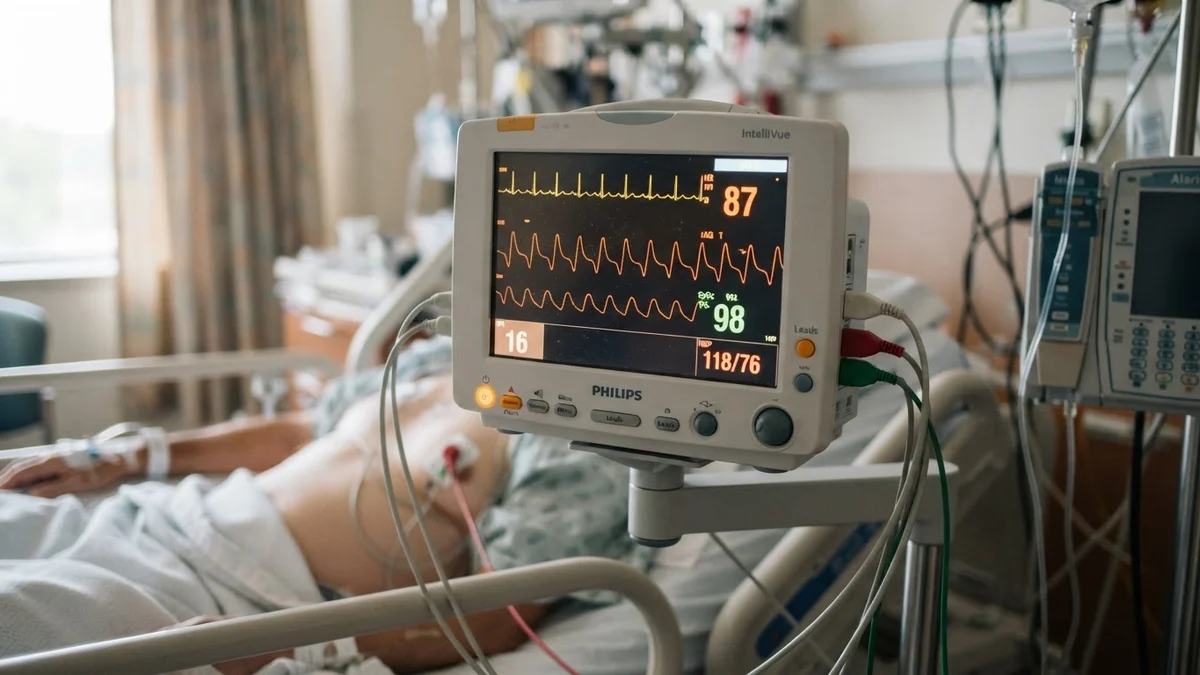
An electrocardiogram (ECG or EKG) is a quick, painless test that records the electrical activity of the heart. It is used in hospitals, clinics and ambulances around the world to check heart rhythm and look for signs of heart problems.
Why an ECG Is Done
- Chest pain or discomfort
- Palpitations or irregular heartbeat
- Shortness of breath or dizziness
- Routine check before surgery
- Monitoring known heart conditions or medicines
What an ECG Can Show
| Finding | What it means |
|---|---|
| Heart rate | Whether the heart is beating too fast or too slow |
| Rhythm | Regular or irregular beats, such as atrial fibrillation |
| Signs of heart attack | Current or previous damage to the heart muscle |
| Heart enlargement | Thickened heart walls |
| Conduction problems | Delays in electrical signals |
What Happens During the Test
- You lie on a bed and expose your chest, wrists and ankles.
- Small sticky electrodes are placed on the skin.
- The machine records the heart’s activity for a few seconds to minutes.
- The electrodes are removed. The test is painless.
Other Types of ECG
- Holter monitor: worn for 24 hours or more to catch intermittent rhythm problems.
- Exercise (stress) ECG: recorded while walking on a treadmill.
Limitations
A normal ECG does not rule out all heart problems. Doctors may order blood tests, echocardiograms or other investigations if symptoms continue.
Conclusion
The ECG is fast, safe and highly useful. If you have chest pain or palpitations, seek medical care promptly; chest pain may be an emergency.
Disclaimer: This article is for general information only and is not a substitute for professional medical advice, diagnosis or treatment. Always consult a qualified healthcare provider about your own situation.