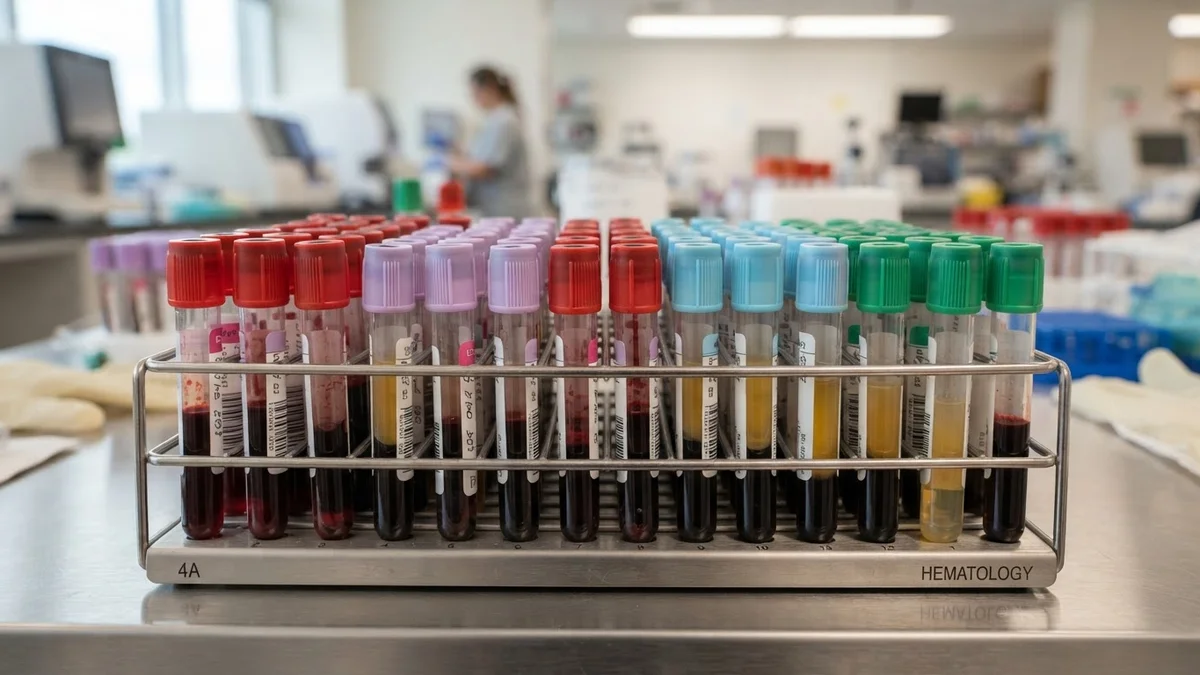
A complete blood count (CBC) is one of the most commonly ordered blood tests in hospitals and clinics worldwide. It gives a broad picture of your health by measuring the different cells in your blood.
What a CBC Measures
| Component | What it does | Possible meaning if abnormal |
|---|---|---|
| Haemoglobin (Hb) | Carries oxygen in red blood cells | Low: anemia; High: dehydration or other conditions |
| Red blood cells (RBC) | Transport oxygen | Low or high counts need further checks |
| Haematocrit | Proportion of blood made of red cells | Follows haemoglobin trends |
| MCV | Average size of red cells | Small cells may suggest iron deficiency; large cells may suggest B12 or folate deficiency |
| White blood cells (WBC) | Fight infection | High: infection or inflammation; Low: some infections, medicines or bone marrow problems |
| Platelets | Help blood clot | Low: bleeding risk; High: inflammation or other causes |
Why Doctors Order a CBC
- Routine health check-ups
- Investigating tiredness, weakness or fever
- Checking for infection or inflammation
- Monitoring chronic conditions or treatments
- Before surgery
How to Prepare
A CBC usually needs no fasting. However, if other tests are being done at the same time, your doctor may ask you to fast. A small blood sample is taken from a vein in your arm.
Understanding Your Results
Reference ranges vary slightly between laboratories and by age and sex. A result just outside the range is not always a problem. Your doctor interprets results alongside your symptoms and history.
Conclusion
The CBC is a simple, powerful test that helps doctors detect anemia, infection and many other conditions. Always review your results with a qualified healthcare provider.
Disclaimer: This article is for general information only and is not a substitute for professional medical advice, diagnosis or treatment. Always consult a qualified healthcare provider about your own situation.